Source IoT Gateway for Data Acquisition, M2M, and PLC Control
Compare 30 industrial IoT gateway options from verified Chinese manufacturers. These devices support Linux, 4G LTE, and multiple serial ports for data acquisition, M2M applications, and PLC integration in diverse automation environments; compare the available evidence and request quotations based on your requirements.
Key considerations
Products List


Comprehensive Sourcing Guide
IoT Gateway Sourcing Guide
Selecting the right IoT gateway requires balancing connectivity, processing power, and environmental durability. Buyers must first define whether the device serves as a simple data logger or a complex edge computing node. The observed market includes options ranging from basic ARM-based controllers to more robust units with multiple serial and Ethernet ports. Understanding these distinctions prevents over-specification and ensures the chosen hardware aligns with the specific data acquisition needs of the project.
Procurement teams should also evaluate the pre-installed software ecosystem, as this significantly impacts deployment speed. Many modern gateways come with Linux-based operating systems and web interfaces, facilitating easier integration with platforms like Node-RED or MQTT brokers. Verifying the compatibility of the pre-loaded OS with existing IT infrastructure is crucial. This step ensures that the gateway can communicate seamlessly with cloud services and local SCADA systems without requiring extensive custom development.
Product Scope and Observed Listing Signals
The current market for IoT gateways displays a wide variance in pricing and minimum order quantities, reflecting diverse target segments. Listings indicate price points from approximately sixteen to nearly three thousand dollars, suggesting a spectrum from entry-level modules to industrial-grade appliances. Minimum order quantities typically range from one to ten units, allowing for flexible prototyping and small-scale deployments. This variability enables buyers to scale their procurement strategy according to immediate project needs and budget constraints.
Observed product attributes highlight key differentiators such as memory capacity, storage type, and connectivity options. For instance, some units feature eight gigabytes of eMMC storage alongside dual-core processors, while others offer optional higher memory configurations. Connectivity interfaces often include multiple RS485 and RS232 ports, essential for legacy industrial equipment integration. Additionally, the presence of 4G LTE capabilities in certain models expands deployment possibilities to remote locations without reliable wired infrastructure.
Technical Specifications to Verify
When evaluating technical specifications, buyers must prioritize the processor architecture and memory allocation to ensure adequate performance. Units with ARM Cortex-A35 processors running at 800MHz or higher are common for handling moderate computational loads. It is vital to verify the available DRAM, which can range from 128MB to 1GB, as insufficient memory may lead to system instability during complex data processing tasks. Confirming these hardware specs prevents bottlenecks in real-time data acquisition scenarios.
Connectivity and interface compatibility are equally critical for successful integration into existing industrial networks. Verify the number and type of Ethernet ports, ensuring they support standard 10/100 Mbps speeds for reliable wired communication. Additionally, check for the presence of serial ports, such as RS485 and RS232, which are indispensable for connecting PLCs and sensors. The inclusion of USB ports and SD card slots offers flexibility for peripheral connections and local data storage, enhancing the gateway's versatility in diverse operational environments.
Compliance and Safety Documentation
Ensuring that IoT gateways meet relevant safety and environmental standards is a mandatory step for industrial deployments. Buyers should request documentation confirming compliance with certifications such as CE and RoHS, which indicate adherence to European health, safety, and environmental protection standards. These certifications are particularly important for products intended for use in regulated markets or sensitive industrial facilities where equipment safety is paramount.
Power supply specifications must also be carefully reviewed to match the operational environment. Many industrial gateways are designed to operate on DC 24V or wide-range AC/DC inputs, providing flexibility in power integration. Verify that the power consumption ratings align with the site's energy management goals. Additionally, confirm the physical mounting options, such as DIN rail compatibility, to ensure the device can be securely installed in control cabinets or field enclosures without requiring custom brackets.
Cost Drivers and Commercial Terms
Several factors influence the total cost of ownership for IoT gateways, including hardware specifications, software licensing, and supply chain dynamics. Higher performance components, such as increased memory or advanced processors, naturally command higher prices. Buyers should assess whether the additional cost translates to tangible benefits for their specific application, avoiding unnecessary expenditure on features that will not be utilized. Understanding these cost drivers helps in creating a more accurate budget forecast.
Commercial terms, including supply ability and packaging details, also play a significant role in procurement planning. Suppliers with a stated supply ability of one thousand sets per month can generally support larger orders without significant lead time delays. Packaging options, such as single boxes or industrial cartons, affect shipping costs and product protection during transit. Negotiating clear terms regarding these aspects ensures a smoother procurement process and minimizes unexpected logistical expenses.
Supplier Qualification and Quality Control
Verifying the supplier's manufacturing capabilities and quality control processes is essential for maintaining product reliability. Buyers should confirm that the supplier is a direct manufacturer rather than a trading company, as this often ensures better technical support and consistency in product quality. Checking the place of origin, such as Fujian or Shandong in China, can provide insights into the regional manufacturing ecosystem and supply chain maturity.
Quality control measures should include rigorous testing of connectivity interfaces and software stability. Request information on the supplier's testing protocols for serial communication ports and network interfaces to ensure data integrity. Additionally, inquire about the warranty terms and after-sales support structure. A robust support system is crucial for troubleshooting issues that may arise during deployment, ensuring minimal downtime for critical IoT applications.
Long-Term Procurement Checks
Long-term success with IoT gateways depends on the supplier's ability to provide ongoing software updates and hardware revisions. Buyers should verify the availability of firmware updates that address security vulnerabilities and add new features. A commitment to maintaining the pre-installed Linux operating system and web management tools ensures the gateway remains compatible with evolving IT standards and security requirements.
Scalability and future-proofing are also key considerations for sustained procurement. Assess whether the supplier offers a roadmap for next-generation devices that maintain compatibility with current integrations. This foresight allows organizations to expand their IoT deployments without facing obsolescence issues. Regularly reviewing the supplier's performance and product evolution helps in maintaining a resilient and efficient industrial IoT infrastructure over time.
FAQs
What are the key specifications of the Elastel EG324 Lite IoT Gateway?
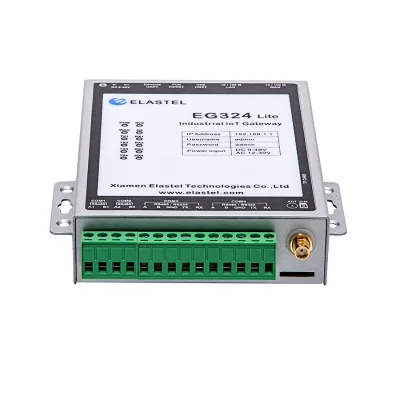
The Elastel EG324 Lite features an ARM Dual-core A35 CPU at 800MHz with 8 GB eMMC storage and 128MB DRAM. It includes two 10/100 Mbps Ethernet ports, two RS485, and two RS-232/485 serial ports. The device runs Linux 5.10 with webUI management and supports 4G LTE connectivity for industrial data acquisition applications.
Can the HMI1004-HDMI gateway operate on standard industrial power supplies?
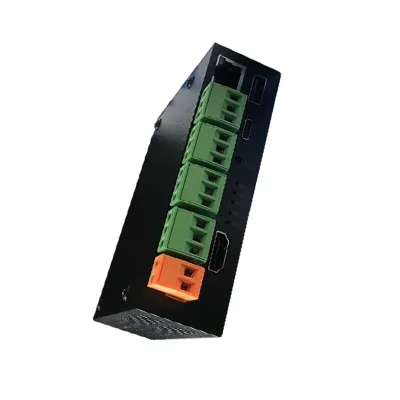
Yes, the HMI1004-HDMI gateway supports AC 12-24V and DC 12-42V power supplies. It consumes approximately 8W of power and is designed for mounting on rails. This flexibility allows it to integrate seamlessly into various industrial control systems requiring stable power input for reliable M2M and IoT application performance.
Which communication interfaces are available on the HMI1002-ARM model?
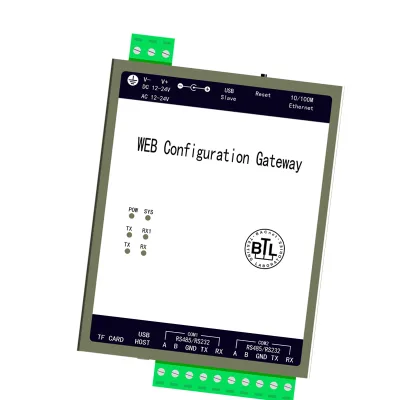
The HMI1002-ARM model provides one high-performance 100M/10M auto MDI/MDIX network port and one RS485/RS232 multiplexed serial port. It operates on DC 24V power with a consumption of 6W. This configuration supports essential industrial communication protocols for data acquisition and remote monitoring tasks in constrained environments.
What operating systems are pre-installed on these IoT gateways?
The Elastel EG324 Lite comes pre-installed with Linux 5.10 and includes webUI management programs for easy configuration. The HMI1004-HDMI and HMI1002-ARM models also run Linux operating systems. These stable platforms support various gateway specifications including Node-Red, BACnet, Modbus, and MQTT protocols for diverse industrial automation needs.
Where are these IoT gateways manufactured and what is the supply capacity?
These devices are manufactured in Fujian and Shandong, China. The supplier offers a supply ability of 1000 sets per month. Products are packaged in single boxes or industrial cartons. This manufacturing base ensures consistent quality and reliable delivery schedules for bulk industrial procurement requirements across global markets.
What are the memory and storage options for the EG324 Lite?
The EG324 Lite includes 8 GB of eMMC storage and 128MB of DRAM, with 512MB DRAM available as an optional upgrade. It also features one SD slot for additional storage expansion. These memory configurations support efficient data acquisition and local processing for IoT gateway applications requiring reliable data handling.